
This is not a news article about the data centers coming to Louisa County. If you’re looking for objective reporting, I encourage you to read the excellent work of Tammy Purcell at Engage Louisa. This, instead, is an editorial — the first I’ve given myself permission to write as the publisher.
I don’t take that lightly. I value neutrality and believe our job is to reflect our community, not steer it. But in this case, the survey results needed a human voice — someone to point out the things that may not be obvious at a glance. And someone willing to say the quiet parts out loud.
Let me be clear: this editorial won’t please everyone.
When we released the poll, one reader on social media — “Louisa Jon” — commented, “Not much of a poll…” And he’s not wrong. But if we had done no poll at all, I imagine we wouldn’t have received any criticism either. That’s the thing about effort — it’s easier to critique than create. Still, we’re grateful for the feedback. As Louisa Jon finished his comment: “…still, a marked improvement over any public ‘outreach’ by the BOS or the Planning Commission.”
For context, this poll ran for less than a week and collected 561 responses — more than our months-long, region-wide Wave Makers survey, which topped out at 424. That alone raises an important question: how invested are people, really, in this topic? And how accurate are self-assessments like the one in Question #4, where respondents rated their knowledge about the data centers at an average of 7 out of 10?
Another note: Question #7 — which asked, “What is your biggest concern, if any, about data centers coming to Louisa County?” — was originally intended to allow multiple selections. Due to a technical limitation in our survey software, respondents could only choose one. Unfortunately, once the error was discovered, it was too late to change the format without compromising the rest of the responses. Could we have done this better? Yes. But this is what we have, and we hope you can appreciate the intention and the effort.
What the Responses Do and Don’t Reveal
First, let’s talk about volume. 561 people took the time to answer this poll — voluntarily, without incentive, and in a very short window. That alone speaks volumes about how engaged (and perhaps alarmed) our community is when it comes to this issue.
But dig beneath the surface, and what emerges is not just division — it’s dissonance.
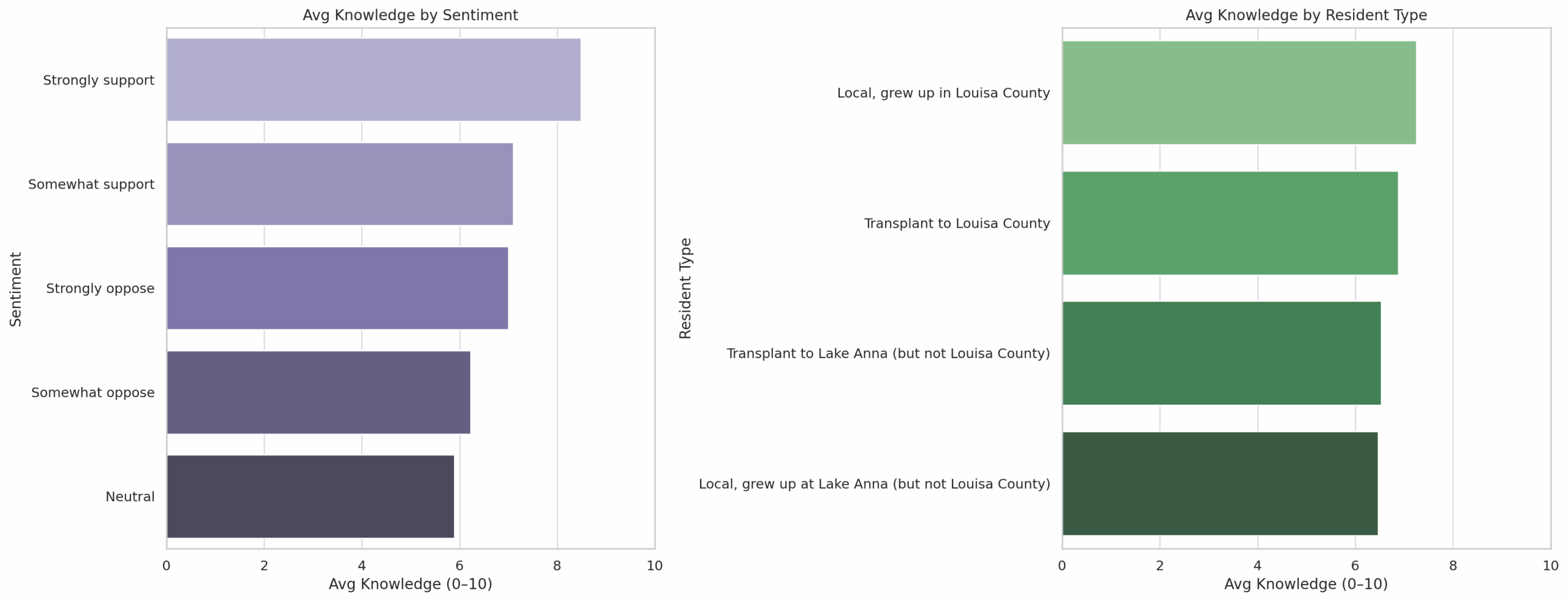
While respondents rated their understanding of the data center issue at an average of 7 out of 10, that number becomes harder to interpret when paired with answers to other questions. For example, some of the most common “concerns” were also listed by respondents who had never lived near a data center and had limited exposure to their actual impact. In fact, the more self-proclaimed knowledge, the more support individuals have for the data centers. At the same time, the people with the most knowledge grew up here and have no first-hand knowledge.
Which brings us to the transplants. Among the most vocal opponents were people who moved to Louisa from places without data centers — and in many cases, they cited perceived concerns such as water usage, environmental degradation, or loss of rural charm. But of the small percentage of transplants who actually had lived near data centers, the responses were more nuanced. A few reported noise or data centers being “ugly”, but others described no issues at all. In short: people are worried, but their worries are not always grounded in firsthand experience.
That doesn’t mean the concerns aren’t valid — only that there’s a gap between perception and impact, and it deserves closer attention before hard lines are drawn.
Locals vs Transplants
You might expect that long-time Louisa residents would be the most vocal against development — but that wasn’t always the case. Interestingly, transplants to Louisa County made up the largest group of respondents who “strongly oppose” data center development.
The most cited concerns overall were: environmental impact, strain on water and resources, loss of rural character, and noise/light/heat pollution.
On the flip side, those who supported data centers mostly pointed to increased tax revenue, job creation, economic growth, and better broadband access.
Still, a full 249 people (nearly half of respondents) said they see no benefit to data centers at all. In my opinion, that kind of rejection doesn’t really help the conversation.
And yet, there’s more complexity. Many of those same people who “strongly oppose” development also rated their knowledge of the subject highly. And therein lies the challenge: If we already feel informed, but we’re only drawing from surface-level impressions or third-party fears, how can we move the conversation forward?
“Don’t Loudoun My Louisa”
And then there’s the group “Don’t Loudoun My Louisa.” We haven’t reached out to them for comment, but their presence online is an interesting development — and here’s why:
According to Data Center Map and other industry sources, Loudoun County — known as “Data Center Alley” — has 243 operational data centers and another 128 in development. That number is staggering, and while I understand that density and scale matter, it’s also important to point out that 3 data centers in Louisa is not the same thing. Not even close.
Just for perspective: Fredericksburg has about 36 data centers; Roanoke has 2.
Now let’s talk about EdgeCore — the company that recently purchased 697 acres in the Shannon Hill Regional Business Park. Their existing site in Ashburn powers 72 megawatts. But their plans for Louisa? 1.1 gigawatts. That’s roughly 15 times the power capacity — a scale that’s hard to compare directly but impossible to ignore.
This isn’t meant to argue either side. It’s just to put the numbers in perspective — and to ask the bigger question: What does a project of that size actually mean for a rural community like ours?

Hi! I’m Jennifer Bailey and I partner with entrepreneurs who have massive ideas that could change the world. Most marketing is meaningless. Filled with empty promises, its only job is to bring in new traffic, new leads, and new customers. But I’ve drawn a line in the sand, and I’ve learned that marketing can do so much more than reach business goals and build profit. My methods give businesses the fire and soul they need to reach the right people, set the groundwork for sustainable relationships, and offer true value to the people on both the giving and receiving ends of marketing.
Subscribe for Updates
Sponsors




latest articles
April 21, 2026
Lake Anna Development Continues: Data Centers, Dominion Updates, Roundabout Plaza, New Golf Course & Phosphorus and Hydrilla Management Reports at the 2026 Lake Anna Summit
April 18, 2026
From Louisa County to Hospital Halls: How Virginia Poodles & Doodles Is Making a Broader Impact
April 15, 2026
Lake Anna Waterfront Property | Custom Lake Home for Sale | Lake Anna, VA
March 18, 2026
Puppy Culture, Playgrounds & Early Foundations: How Virginia Poodles & Doodles Raises Confident Companions [Sponsored]
![Featured image for “Puppy Culture, Playgrounds & Early Foundations: How Virginia Poodles & Doodles Raises Confident Companions [Sponsored]”](https://lakeanna.online/wp-content/uploads/2026/02/3-scaled.jpg)
March 2, 2026
The Lion’s Den 1837 Celebrates First Anniversary With Black Tie Evening of Fine Dining and Jazz
February 27, 2026
Five Decades of Innovation in Fishing, and Boating Sustainability at Lake Anna
This is not a news article about the data centers coming to Louisa County. If you’re looking for objective reporting, I encourage you to read the excellent work of Tammy Purcell at Engage Louisa. This, instead, is an editorial — the first I’ve given myself permission to write as the publisher.
I don’t take that lightly. I value neutrality and believe our job is to reflect our community, not steer it. But in this case, the survey results needed a human voice — someone to point out the things that may not be obvious at a glance. And someone willing to say the quiet parts out loud.
Let me be clear: this editorial won’t please everyone.
When we released the poll, one reader on social media — “Louisa Jon” — commented, “Not much of a poll…” And he’s not wrong. But if we had done no poll at all, I imagine we wouldn’t have received any criticism either. That’s the thing about effort — it’s easier to critique than create. Still, we’re grateful for the feedback. As Louisa Jon finished his comment: “…still, a marked improvement over any public ‘outreach’ by the BOS or the Planning Commission.”
For context, this poll ran for less than a week and collected 561 responses — more than our months-long, region-wide Wave Makers survey, which topped out at 424. That alone raises an important question: how invested are people, really, in this topic? And how accurate are self-assessments like the one in Question #4, where respondents rated their knowledge about the data centers at an average of 7 out of 10?
Another note: Question #7 — which asked, “What is your biggest concern, if any, about data centers coming to Louisa County?” — was originally intended to allow multiple selections. Due to a technical limitation in our survey software, respondents could only choose one. Unfortunately, once the error was discovered, it was too late to change the format without compromising the rest of the responses. Could we have done this better? Yes. But this is what we have, and we hope you can appreciate the intention and the effort.
What the Responses Do and Don’t Reveal
First, let’s talk about volume. 561 people took the time to answer this poll — voluntarily, without incentive, and in a very short window. That alone speaks volumes about how engaged (and perhaps alarmed) our community is when it comes to this issue.
But dig beneath the surface, and what emerges is not just division — it’s dissonance.
While respondents rated their understanding of the data center issue at an average of 7 out of 10, that number becomes harder to interpret when paired with answers to other questions. For example, some of the most common “concerns” were also listed by respondents who had never lived near a data center and had limited exposure to their actual impact. In fact, the more self-proclaimed knowledge, the more support individuals have for the data centers. At the same time, the people with the most knowledge grew up here and have no first-hand knowledge.
Which brings us to the transplants. Among the most vocal opponents were people who moved to Louisa from places without data centers — and in many cases, they cited perceived concerns such as water usage, environmental degradation, or loss of rural charm. But of the small percentage of transplants who actually had lived near data centers, the responses were more nuanced. A few reported noise or data centers being “ugly”, but others described no issues at all. In short: people are worried, but their worries are not always grounded in firsthand experience.
That doesn’t mean the concerns aren’t valid — only that there’s a gap between perception and impact, and it deserves closer attention before hard lines are drawn.
Locals vs Transplants
You might expect that long-time Louisa residents would be the most vocal against development — but that wasn’t always the case. Interestingly, transplants to Louisa County made up the largest group of respondents who “strongly oppose” data center development.
The most cited concerns overall were: environmental impact, strain on water and resources, loss of rural character, and noise/light/heat pollution.
On the flip side, those who supported data centers mostly pointed to increased tax revenue, job creation, economic growth, and better broadband access.
Still, a full 249 people (nearly half of respondents) said they see no benefit to data centers at all. In my opinion, that kind of rejection doesn’t really help the conversation.
And yet, there’s more complexity. Many of those same people who “strongly oppose” development also rated their knowledge of the subject highly. And therein lies the challenge: If we already feel informed, but we’re only drawing from surface-level impressions or third-party fears, how can we move the conversation forward?
“Don’t Loudoun My Louisa”
And then there’s the group “Don’t Loudoun My Louisa.” We haven’t reached out to them for comment, but their presence online is an interesting development — and here’s why:
According to Data Center Map and other industry sources, Loudoun County — known as “Data Center Alley” — has 243 operational data centers and another 128 in development. That number is staggering, and while I understand that density and scale matter, it’s also important to point out that 3 data centers in Louisa is not the same thing. Not even close.
Just for perspective: Fredericksburg has about 36 data centers; Roanoke has 2.
Now let’s talk about EdgeCore — the company that recently purchased 697 acres in the Shannon Hill Regional Business Park. Their existing site in Ashburn powers 72 megawatts. But their plans for Louisa? 1.1 gigawatts. That’s roughly 15 times the power capacity — a scale that’s hard to compare directly but impossible to ignore.
This isn’t meant to argue either side. It’s just to put the numbers in perspective — and to ask the bigger question: What does a project of that size actually mean for a rural community like ours?
Hi! I’m Jennifer Bailey and I partner with entrepreneurs who have massive ideas that could change the world. Most marketing is meaningless. Filled with empty promises, its only job is to bring in new traffic, new leads, and new customers. But I’ve drawn a line in the sand, and I’ve learned that marketing can do so much more than reach business goals and build profit. My methods give businesses the fire and soul they need to reach the right people, set the groundwork for sustainable relationships, and offer true value to the people on both the giving and receiving ends of marketing.
Subscribe for Updates
Sponsors
latest articles
April 21, 2026
Lake Anna Development Continues: Data Centers, Dominion Updates, Roundabout Plaza, New Golf Course & Phosphorus and Hydrilla Management Reports at the 2026 Lake Anna Summit
April 18, 2026
From Louisa County to Hospital Halls: How Virginia Poodles & Doodles Is Making a Broader Impact
April 15, 2026
Lake Anna Waterfront Property | Custom Lake Home for Sale | Lake Anna, VA
March 18, 2026
Puppy Culture, Playgrounds & Early Foundations: How Virginia Poodles & Doodles Raises Confident Companions [Sponsored]
March 2, 2026
The Lion’s Den 1837 Celebrates First Anniversary With Black Tie Evening of Fine Dining and Jazz
February 27, 2026
Five Decades of Innovation in Fishing, and Boating Sustainability at Lake Anna
Spotsylvania Tourism Growth Outpaces Statewide Averages with 35% Surge Since 2019
SPOTSYLVANIA COUNTY, VA — Visitor spending in Spotsylvania County has soared nearly 35% since 2019, reflecting a strong rebound and…
Article By Jen Bailey
![Featured image for “[Spotsylvania] New Speed Enforcement in School Zones”](https://lakeanna.online/wp-content/uploads/2025/09/Blog-pic-scaled.jpg)
[Spotsylvania] New Speed Enforcement in School Zones
To curb speeding and improve student safety, Spotsylvania officials have announced the launch of an automated speed enforcement program in…
Article By Jen Bailey
Belmont Ruritan Clubs Award $26,000 in Scholarships to Local Seniors
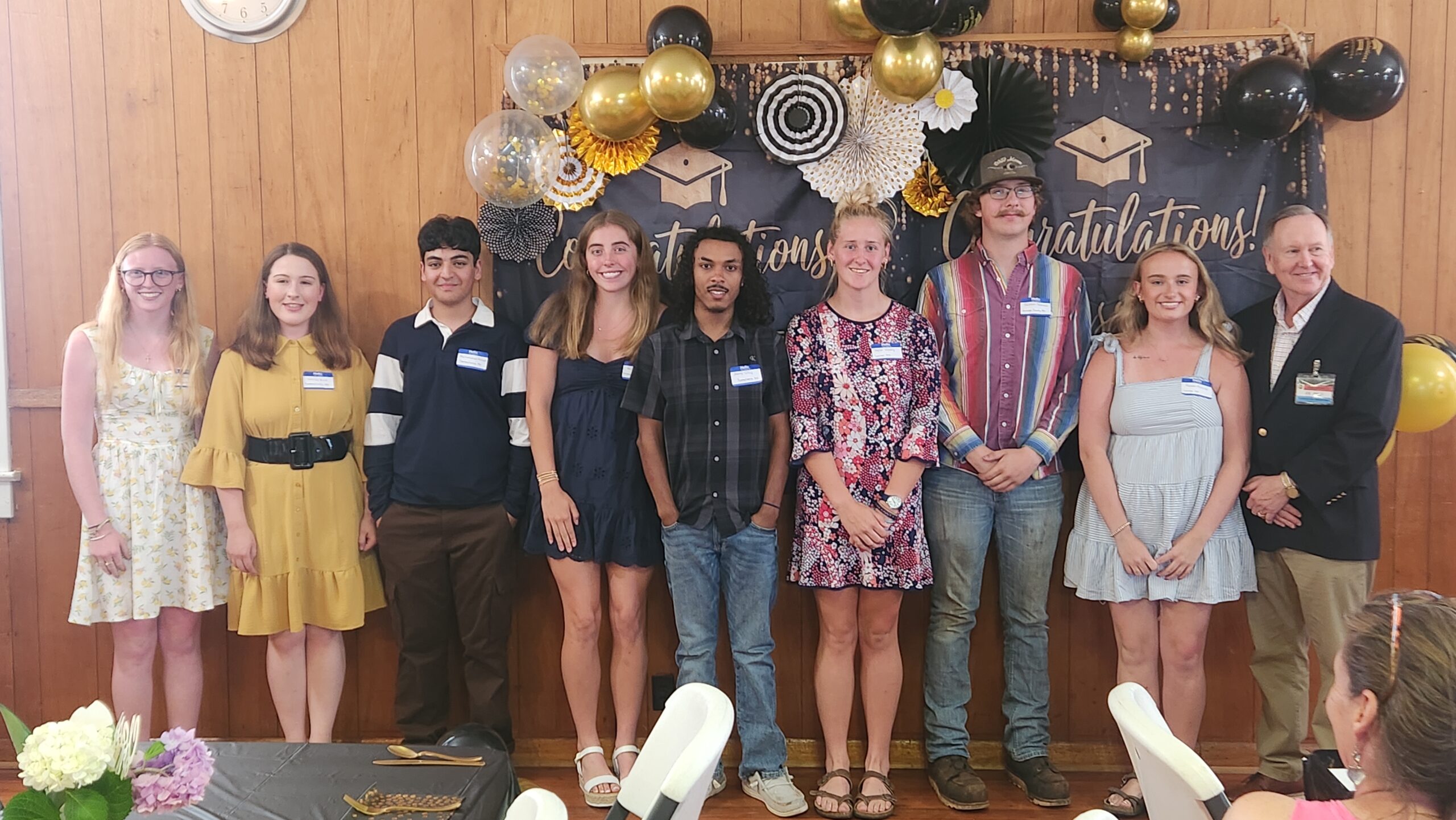
Thirteen outstanding seniors from Louisa, Orange, and Spotsylvania counties were recognized Tuesday evening, June 3, as the Belmont Ruritan Club…