
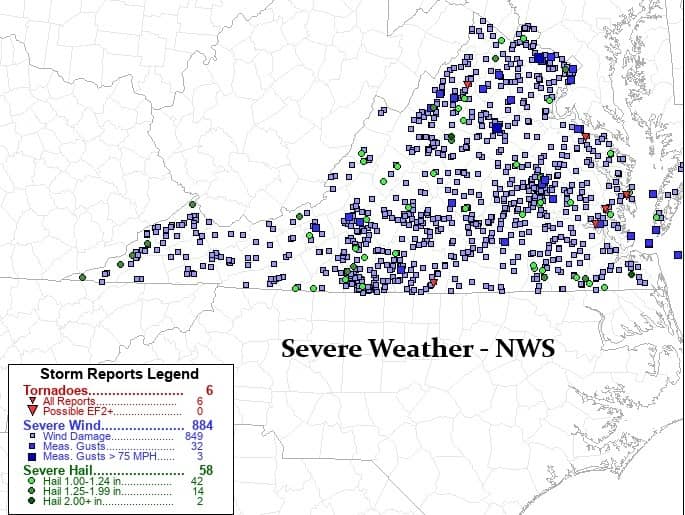
Now that 2025 is in the rearview mirror, here is a look back at the year’s weather highlights.
The year was something of a Jekyll-and-Hyde season, with a very wet first half followed by a notably dry second half. Temperatures were warmer than normal early in the year but trended colder than average during the latter months.
Average annual precipitation in the area is about 44 inches. In 2025, total measured precipitation was 39.54 inches. The first six months accounted for 26.14 inches, while just 13.40 inches fell during the final six months. Roughly two-thirds of the year’s rainfall occurred in the first half of the year, with the remaining one-third falling in the second half.
The wettest stretch was April through July, which produced 22.89 inches of rain — more than 50 percent of the year’s total precipitation.
Snowfall was above normal, with most accumulation occurring in January and February, which is typical. Total snowfall for the year reached 20.5 inches, about 8 inches above average.
Lake levels were below normal early in the year but rebounded with four consecutive months of above-normal rainfall from late spring into early summer.
Beginning in August, large-scale weather patterns over the eastern United States shifted to cooler and drier conditions. Rainfall was well below normal during the final five months of the year, contributing to falling lake levels and the development of drought conditions. Cooler temperatures helped limit evaporation, reducing some impacts of the drought.
Thunderstorms were frequent in May, June and July, with several outbreaks producing large hail and strong winds. Virginia recorded six tornadoes in 2025, none of which occurred in or near counties bordering Lake Anna.
The coldest temperature of the year was 7 degrees on Jan. 23. The hottest day occurred June 23, when temperatures reached 102 degrees.
Monthly Precipitation was as follows:
Jan: Rain 2.10” Snow 7.1”
Feb: Rain 5.32” Snow 9.1”
Mar: Rain 1.60”
Apr: Rain 4.92”
May: Rain 7.31”
Jun: Rain 4.89”
Jul: Rain 5.77”
Aug: Rain 0.72”
Sep: Rain 1.98”
Oct: Rain 2.00”
Nov: Rain 1.16”
Dec: Rain 1.77” Snow 4.3””

I grew up an Air Force Brat. Traveled the country and lived in Georgia, Maine, New York, Hawaii and Oklahoma.
I fell in love with the weather in Oklahoma. My father was transferred to Tinker AFB in 1973. While in Temporary housing (a mobile home, which is the standard in Oklahoma) I experienced my first severe thunderstorm with strong winds and hail the size of baseballs. The next day I was in the base library looking up books on weather. The rest is history.
I graduated from the University of Oklahoma in 1983 with a Bachelor’s Degree in Meteorology. The first two years we took Calculus, Differential equations, Physics, Chemistry and Computer science classes with the Engineering Students. It was a grind. My degree is actually from the College of Engineering. The last 2-3 year’s focus was on Meteorology including Observational networks (Satellite, Radar, Surface), Physics, Thermodynamics, Dynamics, Synoptic, Winter Weather, Severe Weather and Climatology.
My first job out of college was with a small forecasting company in Oklahoma City. I was immediately put on TV (OETA) and Radio (WKY) as their broadcast Meteorologist. After two years in broadcasting, I decided to pursue the National Weather Service route and got a position in Toledo, OH as an intern. After a couple of years, I was promoted to a forecaster position at the Cleveland Forecast office. I quickly moved into the Weather Preparedness position and was responsible for all the preparedness activities in the state of Ohio.
In 1992 I decided to pursue other forecast opportunities and moved to the Meteorological Operations Division of the National Meteorological Center in Washington, DC. This group is now called WPC (Weather Prediction Center). There I fine-tuned my forecasting of Synoptic Weather with my focus on Heavy Convective Rainfall and Winter Storms, under the supervision of Dr. Louis Uccellini. He has written several books on East Coast Winter storms. I was promoted to a Senior Branch Forecast position during my tenure at MOD. Part of my job was to teach weather classes at COMET (Cooperative Program for Operational Meteorology, Education, and Training).
In 2012 I was given the opportunity to start up a new weather support group with the FAA (Federal Aviation Administration) in Warrenton, VA at the ATCSSC (Air Traffic Control System Command Center). The ATCSCC is where the FAA identifies solutions to air traffic inefficiencies in the NAS (National Air Space) for the CONUS (Continental United State). Weather impacts are the biggest impact on Aviation with yearly losses over 20 billion dollars. My job was to help lower these inefficiencies/costs by providing weather impact briefings and forecasts in order to keep the air planes moving as safely and efficiently as possible.
I retired in 2022 and now am running Lake Anna Weather, LLC.
Subscribe for Updates
Sponsors




latest articles
April 21, 2026
Lake Anna Development Continues: Data Centers, Dominion Updates, Roundabout Plaza, New Golf Course & Phosphorus and Hydrilla Management Reports at the 2026 Lake Anna Summit
April 18, 2026
From Louisa County to Hospital Halls: How Virginia Poodles & Doodles Is Making a Broader Impact

April 15, 2026
Lake Anna Waterfront Property | Custom Lake Home for Sale | Lake Anna, VA
March 18, 2026
Puppy Culture, Playgrounds & Early Foundations: How Virginia Poodles & Doodles Raises Confident Companions [Sponsored]
![Featured image for “Puppy Culture, Playgrounds & Early Foundations: How Virginia Poodles & Doodles Raises Confident Companions [Sponsored]”](https://lakeanna.online/wp-content/uploads/2026/02/3-scaled.jpg)
March 2, 2026
The Lion’s Den 1837 Celebrates First Anniversary With Black Tie Evening of Fine Dining and Jazz

February 27, 2026
Five Decades of Innovation in Fishing, and Boating Sustainability at Lake Anna
Now that 2025 is in the rearview mirror, here is a look back at the year’s weather highlights.
The year was something of a Jekyll-and-Hyde season, with a very wet first half followed by a notably dry second half. Temperatures were warmer than normal early in the year but trended colder than average during the latter months.
Average annual precipitation in the area is about 44 inches. In 2025, total measured precipitation was 39.54 inches. The first six months accounted for 26.14 inches, while just 13.40 inches fell during the final six months. Roughly two-thirds of the year’s rainfall occurred in the first half of the year, with the remaining one-third falling in the second half.
The wettest stretch was April through July, which produced 22.89 inches of rain — more than 50 percent of the year’s total precipitation.
Snowfall was above normal, with most accumulation occurring in January and February, which is typical. Total snowfall for the year reached 20.5 inches, about 8 inches above average.
Lake levels were below normal early in the year but rebounded with four consecutive months of above-normal rainfall from late spring into early summer.
Beginning in August, large-scale weather patterns over the eastern United States shifted to cooler and drier conditions. Rainfall was well below normal during the final five months of the year, contributing to falling lake levels and the development of drought conditions. Cooler temperatures helped limit evaporation, reducing some impacts of the drought.
Thunderstorms were frequent in May, June and July, with several outbreaks producing large hail and strong winds. Virginia recorded six tornadoes in 2025, none of which occurred in or near counties bordering Lake Anna.
The coldest temperature of the year was 7 degrees on Jan. 23. The hottest day occurred June 23, when temperatures reached 102 degrees.
Monthly Precipitation was as follows:
Jan: Rain 2.10” Snow 7.1”
Feb: Rain 5.32” Snow 9.1”
Mar: Rain 1.60”
Apr: Rain 4.92”
May: Rain 7.31”
Jun: Rain 4.89”
Jul: Rain 5.77”
Aug: Rain 0.72”
Sep: Rain 1.98”
Oct: Rain 2.00”
Nov: Rain 1.16”
Dec: Rain 1.77” Snow 4.3””
I grew up an Air Force Brat. Traveled the country and lived in Georgia, Maine, New York, Hawaii and Oklahoma.
I fell in love with the weather in Oklahoma. My father was transferred to Tinker AFB in 1973. While in Temporary housing (a mobile home, which is the standard in Oklahoma) I experienced my first severe thunderstorm with strong winds and hail the size of baseballs. The next day I was in the base library looking up books on weather. The rest is history.
I graduated from the University of Oklahoma in 1983 with a Bachelor’s Degree in Meteorology. The first two years we took Calculus, Differential equations, Physics, Chemistry and Computer science classes with the Engineering Students. It was a grind. My degree is actually from the College of Engineering. The last 2-3 year’s focus was on Meteorology including Observational networks (Satellite, Radar, Surface), Physics, Thermodynamics, Dynamics, Synoptic, Winter Weather, Severe Weather and Climatology.
My first job out of college was with a small forecasting company in Oklahoma City. I was immediately put on TV (OETA) and Radio (WKY) as their broadcast Meteorologist. After two years in broadcasting, I decided to pursue the National Weather Service route and got a position in Toledo, OH as an intern. After a couple of years, I was promoted to a forecaster position at the Cleveland Forecast office. I quickly moved into the Weather Preparedness position and was responsible for all the preparedness activities in the state of Ohio.
In 1992 I decided to pursue other forecast opportunities and moved to the Meteorological Operations Division of the National Meteorological Center in Washington, DC. This group is now called WPC (Weather Prediction Center). There I fine-tuned my forecasting of Synoptic Weather with my focus on Heavy Convective Rainfall and Winter Storms, under the supervision of Dr. Louis Uccellini. He has written several books on East Coast Winter storms. I was promoted to a Senior Branch Forecast position during my tenure at MOD. Part of my job was to teach weather classes at COMET (Cooperative Program for Operational Meteorology, Education, and Training).
In 2012 I was given the opportunity to start up a new weather support group with the FAA (Federal Aviation Administration) in Warrenton, VA at the ATCSSC (Air Traffic Control System Command Center). The ATCSCC is where the FAA identifies solutions to air traffic inefficiencies in the NAS (National Air Space) for the CONUS (Continental United State). Weather impacts are the biggest impact on Aviation with yearly losses over 20 billion dollars. My job was to help lower these inefficiencies/costs by providing weather impact briefings and forecasts in order to keep the air planes moving as safely and efficiently as possible.
I retired in 2022 and now am running Lake Anna Weather, LLC.
Subscribe for Updates
Sponsors
latest articles
April 21, 2026
Lake Anna Development Continues: Data Centers, Dominion Updates, Roundabout Plaza, New Golf Course & Phosphorus and Hydrilla Management Reports at the 2026 Lake Anna Summit
April 18, 2026
From Louisa County to Hospital Halls: How Virginia Poodles & Doodles Is Making a Broader Impact
April 15, 2026
Lake Anna Waterfront Property | Custom Lake Home for Sale | Lake Anna, VA
March 18, 2026
Puppy Culture, Playgrounds & Early Foundations: How Virginia Poodles & Doodles Raises Confident Companions [Sponsored]
March 2, 2026
The Lion’s Den 1837 Celebrates First Anniversary With Black Tie Evening of Fine Dining and Jazz
February 27, 2026
Five Decades of Innovation in Fishing, and Boating Sustainability at Lake Anna
Spotsylvania Tourism Growth Outpaces Statewide Averages with 35% Surge Since 2019
SPOTSYLVANIA COUNTY, VA — Visitor spending in Spotsylvania County has soared nearly 35% since 2019, reflecting a strong rebound and…
Article By Jen Bailey
![Featured image for “[Spotsylvania] New Speed Enforcement in School Zones”](https://lakeanna.online/wp-content/uploads/2025/09/Blog-pic-scaled.jpg)
[Spotsylvania] New Speed Enforcement in School Zones
To curb speeding and improve student safety, Spotsylvania officials have announced the launch of an automated speed enforcement program in…
Article By Jen Bailey
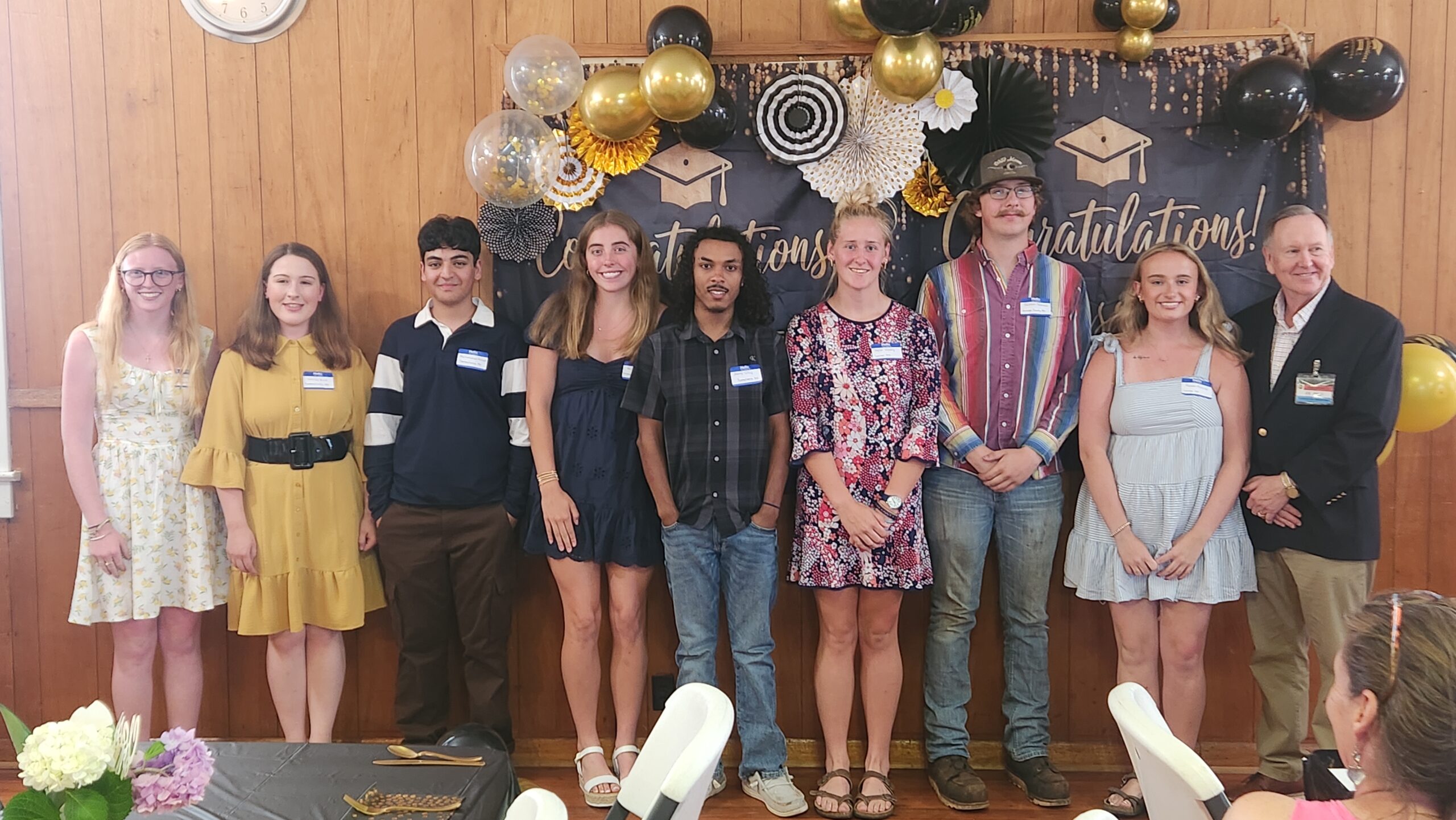
Belmont Ruritan Clubs Award $26,000 in Scholarships to Local Seniors
Thirteen outstanding seniors from Louisa, Orange, and Spotsylvania counties were recognized Tuesday evening, June 3, as the Belmont Ruritan Club…